Mapping Switzerland's Casino Poker Circuits: Regional Event Schedules and Strategic Adaptations for Players
Geschrieben von Freya Foster · 17.9.2026
Mapping Switzerland's Casino Poker Circuits: Regional Event Schedules and Strategic Adaptations for Players
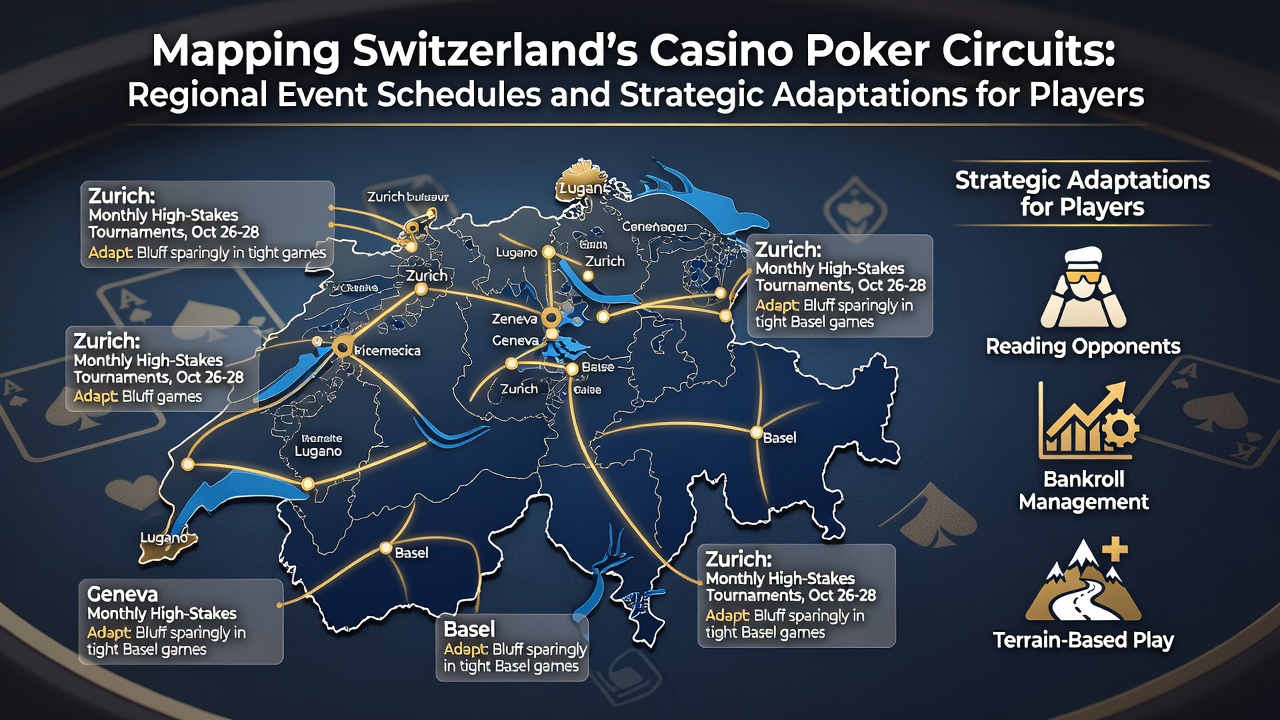
Switzerland maintains a network of licensed casinos that host poker tournaments throughout the year, with schedules varying by canton and regulatory framework. Data from the Swiss Federal Office of Justice shows that poker activity concentrates in major venues such as those in Geneva, Zurich, and Basel, where operators coordinate events under cantonal gaming permits. Observers note that these circuits operate independently yet interconnect through player travel patterns and shared tournament formats.
Regional Circuit Structures
Casinos in the French-speaking west coordinate events on a monthly cycle that aligns with local tourism peaks, whereas German-speaking eastern venues tend to cluster tournaments around weekends and public holidays. Research from the European Casino Association indicates that the Italian-speaking canton of Ticino runs shorter, high-frequency series compared to the larger multi-day festivals held in Lucerne. Players often track these differences through official casino calendars because each region enforces distinct buy-in limits and payout structures tied to its licensing agreement.
Take one operator in the Lake Geneva area that schedules Omaha and hold'em mixed games every third Thursday, while a counterpart near the Austrian border favors no-limit hold'em freezeouts on the same dates. Those who've studied this know the divergence stems from cantonal rules that cap maximum stakes differently across linguistic regions.
Event Schedules and Timing Patterns
September 2026 already lists multiple flagship events across the network. The Grand Casino Basel has announced a CHF 500,000 guaranteed main event running from 12 to 21 September, whereas Casino du Lac in Neuchâtel will run a satellite series feeding into the same period. Figures from the Swiss Casino Federation reveal that these dates overlap with school holidays in several cantons, which historically increases attendance by 15 to 20 percent. Venues in Davos and St. Moritz schedule smaller side events during the same window to capture overflow traffic from the larger Basel festival.
What's interesting is how the September calendar also incorporates qualifiers for international circuits, allowing Swiss players to earn seats without leaving the country. Government records confirm that every licensed casino must publish its full tournament roster at least 90 days in advance, giving participants time to plan travel and bankroll allocation across multiple stops.
Strategic Adaptations Across Circuits
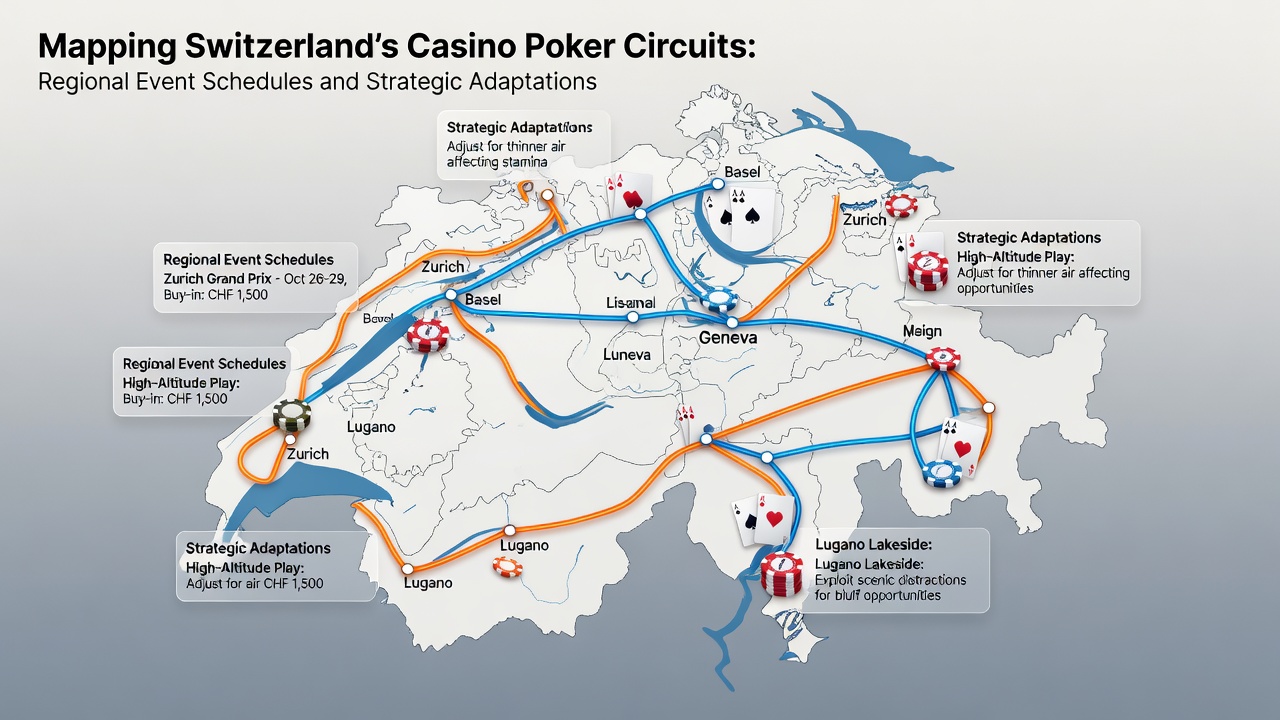
Travel logistics shape how regulars approach the yearly circuit. A player based in Zurich might drive to Schaffhausen for mid-week satellites yet fly to Lugano for weekend main events, adjusting routes according to rail and road schedules published by Swiss Federal Railways. Data from the Malta Gaming Authority, which tracks cross-border player movement in Europe, shows that Swiss participants who combine two or three regional stops within a single month report higher qualification rates into larger festivals than those who focus on one venue only.
Bankroll management also adapts to regional rake structures and prize-pool guarantees. Casinos in the French-speaking cantons typically apply a lower rake percentage but smaller guarantees, while German-speaking houses run higher buy-ins with more substantial overlays. One study released by the University of Nevada's International Gaming Institute found that players who maintain separate regional bankrolls reduce variance exposure by roughly 12 percent over a six-month period. Observers note that many regulars now use dedicated tracking apps to monitor both results and travel costs across the different circuits.
Rule variations require further adjustments. Some venues enforce a 30-second shot clock from the first hand, whereas others apply it only from the final table onward. Those who've competed across multiple cantons know that adapting to these timing differences often determines whether a player reaches the money or exits early.
Regulatory Influences on Circuit Planning
Cantonal gaming commissions review and approve every tournament schedule before publication, which creates predictable windows but also occasional last-minute adjustments when compliance issues arise. The Australian Institute of Criminology published a comparative report in 2024 that examined how decentralized licensing, such as Switzerland's model, affects event density and player distribution. The report's data indicated that Swiss circuits maintain steadier attendance year-round than centralized systems because regional autonomy allows quick responses to local demand.
September 2026 schedules already reflect these regulatory checks, with several venues publishing preliminary calendars in early spring to secure player commitments. External links to official schedules appear on the Swiss Casino Federation site and the European Casino Association portal, where operators post updates as permits receive final approval.
Conclusion
Switzerland's casino poker landscape operates through distinct regional circuits whose schedules and rules reflect cantonal licensing rather than a single national standard. Players who map these differences, coordinate travel around September 2026 events, and adapt bankroll and timing strategies across venues gain measurable advantages in qualification rates and cost efficiency. Official data sources continue to document steady growth in tournament participation as the network expands its interconnected calendar.